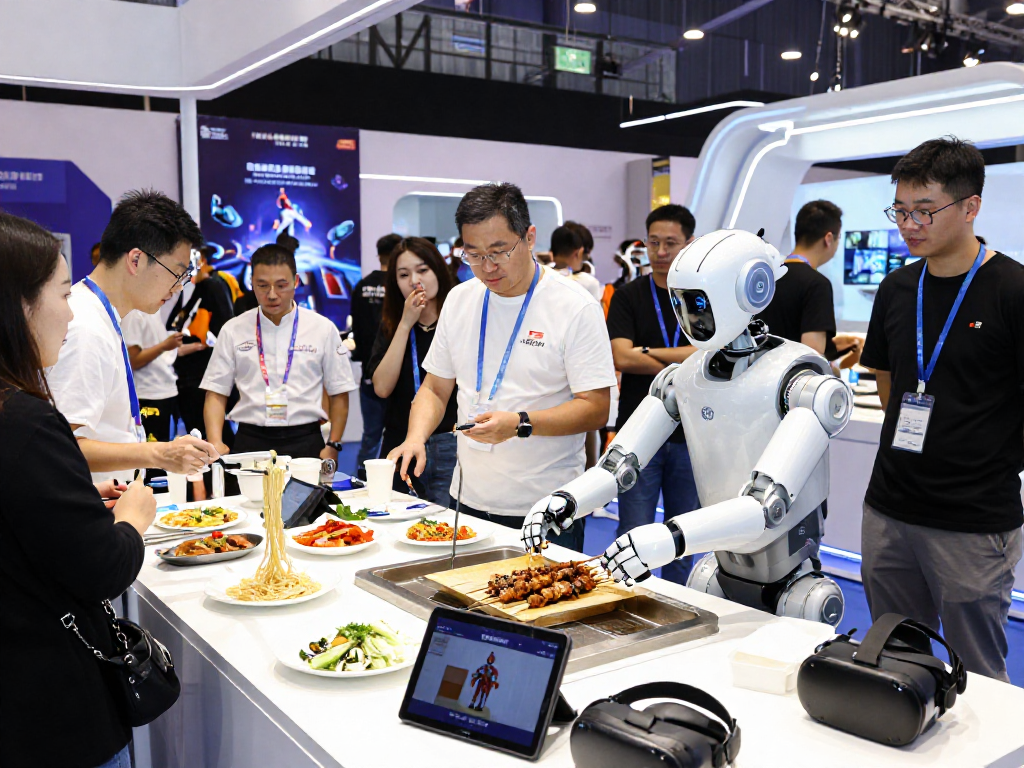
The Rise of Humanoid Robotics in Culinary Arts
The recent advancements in humanoid robotics have opened exciting opportunities in the culinary arts, particularly with the integration of artificial intelligence. The WAIC 2026 (World Artificial Intelligence Conference) showcased remarkable innovations where robots took on complex cooking tasks, such as preparing kebabs and hand-pulled noodles. As the robotics field evolves, it’s clear that AI and robotics are not just streamlining food preparation but are also redefining culinary creativity. For insights into the latest developments in robotics and AI, Robot24 offers comprehensive resources and updates.
Understanding the Role of AI in Food Preparation
AI technologies are transforming food preparation processes by improving efficiency and consistency. Humanoid robots equipped with advanced AI algorithms can perform intricate tasks such as chopping vegetables, controlling cooking temperatures, and timing for various processes. These robots mimic human dexterity and can adapt to different cooking styles, thus enhancing the overall dining experience.
Case Studies: Successful Implementations at WAIC 2026
At WAIC 2026, several companies demonstrated successful AI implementations in kitchens. One standout was a humanoid robot that prepared a full meal in a live cooking competition, showcasing its ability to handle ingredients with precision and flair. Additionally, these robots were able to interact with chefs, following commands and adjusting their techniques based on feedback—a significant leap toward natural human-robot collaboration.
Future Trends: AI Advancements in Cooking
The future of AI in cooking looks promising. As technology advances, we can expect robots to become more intuitive, learning from their experiences and improving over time. Furthermore, the integration of machine learning can enable robots to offer personalized meal suggestions based on dietary preferences and restrictions, making home dining not only convenient but also tailored to individual needs.
Innovations in Human-Robot Interaction
As robotics continue to develop, the way humans interact with robots is also evolving. Enhancements in natural language processing and behavioral algorithms have made it possible for robots to engage in more meaningful and intuitive interactions with humans. The goal is to create robots that can not only perform tasks but also understand and respond to human emotions.
Introducing Coherence Guard: Enhancing Robot Behavior
Palm Garden's introduction of Coherence Guard marks a significant milestone in human-robot interaction. This innovative system enables robots to behave more naturally around people by interpreting social cues and context. The result is a smoother coexistence, especially in environments such as restaurants and homes where the interaction is frequent.
Real-World Applications of Natural Interaction
Real-world applications of enhanced human-robot interaction are already visible. For instance, service robots in hospitality settings utilize Coherence Guard to anticipate guest needs, provide information, and create a pleasant atmosphere. This level of engagement not only improves customer satisfaction but also ensures that robots can operate as trusted assistants in everyday settings.
User Acceptance: Overcoming Emotional Barriers
Overcoming emotional barriers related to robot acceptance remains a challenge. Many users exhibit hesitance toward robots due to fears of job displacement or discomfort with automation. To counter these perceptions, designers and developers must focus on creating robots that evoke positive emotions and reinforce trustworthiness, thereby fostering acceptance in various environments.
The Impact of Robotics on Education and Workplaces
The integration of robotics into education and workplaces signifies a shift towards a more automated and technologically integrated society. Humanoid robots are transforming both sectors by offering new learning experiences and improving operational efficiencies.
Humanoid Robots as Classroom Assistants
In education, humanoid robots like those deployed at Salamanca High School serve as teaching assistants, engaging students in interactive learning experiences. These robots can personalize lessons, respond to student queries, and support educators in managing classroom dynamics, thereby enhancing the overall learning environment.
Preparing Future Workers for an Automated World
As automation becomes more prevalent, preparing students for a future where robotics plays a vital role is essential. Curriculums are being adapted to include robotics and AI, enabling students to develop skills relevant to emerging job markets and fostering a workforce that is adept in technology.
Industry Workforce Transformation: Challenges & Opportunities
The shift towards automation presents both challenges and opportunities for industries. While job displacement may occur in certain sectors, the introduction of robotics can also lead to the creation of new jobs in robot management, programming, and maintenance. Businesses must adapt their strategies to embrace these changes and invest in workforce training.
Advancements in Robotics Design and Functionality
Recent innovations in robot design and functionality are pushing the boundaries of what machines can achieve. The goal is to create robots that not only perform tasks but do so efficiently and adaptively.
Transformable Robots: PrimeBOT's Qiyuan T1 Example
PrimeBOT's introduction of the Qiyuan T1, the world’s first transformable humanoid robot, is a testament to this advancement. This robot can change its physical form to perform a variety of functions, from serving food in a restaurant to assisting in complex industrial tasks, thereby expanding its applicability across different sectors.
Real-World Operations: AGIBOT's New Models
AGIBOT showcased its new models, including the A3 Ultra and G2 Max at WAIC 2026, emphasizing their capacity to handle real-world operations. These robots are designed to work collaboratively with humans, increasing productivity and safety in both manufacturing and service environments.
Technical Challenges in Robotics Engineering
Despite these advancements, technical challenges remain. Engineers face hurdles in robot mobility, sensory perception, and energy management. Developing solutions to these issues is crucial for enhancing robot performance and ensuring they can operate seamlessly in dynamic environments.
Future Perspectives on Robotics and AI Integration
As we look ahead to 2027 and beyond, the integration of robotics and AI is poised to reshape numerous industries. The implications of these changes are vast, necessitating a strategic approach to technological adoption.
Predictions for Robotics in 2027 and Beyond
By 2027, we can anticipate widespread implementation of humanoid robots across various sectors, including healthcare, hospitality, and education. These robots will likely perform complex tasks autonomously, working alongside humans to enhance efficiency and productivity.
Emerging Technologies: Trends to Watch
Future trends in robotics will include advancements in AI, machine learning, and even quantum computing, which may revolutionize robot capabilities. Keeping an eye on these trends will be essential for businesses looking to leverage the benefits of cutting-edge technology.
Maintaining Ethical Standards in Robotic Development
With rapid advancements, maintaining ethical standards in robotic development becomes paramount. Issues around data privacy, decision-making algorithms, and job displacement must be addressed proactively to ensure that technology serves humanity positively.
What’s Next for Robot24 in the Robotics Landscape?
As the landscape of robotics continues to evolve, platforms like Robot24 will provide crucial information and insights. Staying informed about emerging technologies, trends, and ethical considerations will be vital for individuals and businesses navigating this transformative era.